Helleborus IV Infusion Therapy London
Helleborus niger (black hellebore) is an emerging complementary therapy used in integrative oncology. At Wellbeing Medical Group, we offer helleborus IV infusion therapy as part of a personalised therapy plan designed to work alongside your hospital care.
- Tailored to your diagnosis
- National services available


GMC-Registered Doctors
Research-Backed Protocols
Tailored to Your Diagnosis
Trusted by Hundreds of Patients

Helleborus IV Therapy at Wellbeing Medical Group
Helleborus niger, also known as the Christmas Rose, has been used in traditional medicine for centuries. In recent years, preclinical research has begun to explore its potential role in cancer care, with laboratory studies suggesting anti-inflammatory, immune-supporting and anti-proliferative properties.
It is important to be clear: helleborus therapy is not yet supported by clinical trials in humans. The research that exists is promising but early-stage, based primarily on cell line and laboratory studies. We include it in our therapy protocols where Dr Saskia believes it may benefit you, based on your individual diagnosis and how you’re responding to treatment.
Every helleborus protocol is designed personally by Dr Saskia, who reviews your hospital reports and builds a plan that complements your NHS treatment.
We do not offer helleborus as a standalone cancer therapy.
Our clinical team specialises in integrative cancer care. Every member understands the unique needs of cancer patients and stays up to date with the latest research so that your protocol reflects current best practice.
Our clinic on Tower Bridge Road is easily accessible by public transport and within walking distance of London Bridge station. We’ve designed the space to feel calm and private
From the moment you arrive, our team is here to look after you. The clinic is a quiet, comfortable space where you can relax during your therapy.
We offer flexible scheduling around your hospital treatment calendar. Booking is straightforward and our team will help you find times that work.
We begin with a free consultation with our Medical Advisory Team to understand your diagnosis and treatment history. Dr Saskia and the medical team will then recommend the right therapies for your situation and provide clear pricing. There is no obligation to proceed.
How Helleborus May Work
The potential effects of helleborus in cancer care are attributed to several bioactive compounds found in the plant, including saponins, flavonoids and alkaloids. In laboratory studies, these compounds have shown:
Anti-proliferative effects: Helleborus extracts have been shown to inhibit the growth of certain cancer cell lines in the laboratory, including melanoma, breast, colon and kidney cancer cells.
Anti-angiogenic effects: In preclinical studies, helleborus has demonstrated the ability to inhibit the formation of new blood vessels that tumours rely on to grow.
Immune-supporting properties: Laboratory research suggests helleborus may help stimulate certain immune cells that play a role in recognising and responding to cancer cells.
Anti-inflammatory effects: Chronic inflammation is associated with cancer progression. Helleborus contains compounds with anti-inflammatory properties that may help modulate the immune environment around a tumour.
It is important to understand that these findings come from preclinical research — cell line studies and laboratory models. They have not yet been confirmed in human clinical trials. We are transparent about this because we believe you deserve clear information when making decisions about your care.

“What I value about helleborus therapy is its broad compatibility — in our clinical experience, it is well tolerated alongside many forms of cancer treatment. While the research is still in its early stages, the preclinical evidence for its immune-supporting and anti-inflammatory properties is encouraging, and many of our patients find it a helpful part of their integrative care plan.”
- Dr Saskia Kloppenburg Vieth, Consultant in Integrative Oncology

Our Patients — Real Stories, Real Results
Fiona
Diagnosis: Adenocarcinoma non-small cell lung cancer
After one cycle of chemotherapy and immunotherapy, Fiona decided the side effects were too much.
She came to us looking for a different way to support her body alongside her hospital care.
Dr Saskia reviewed her biopsy results, designed an integrative plan around her needs, and worked with her throughout. Her oncologist monitored her progress closely — and Fiona was able to maintain her quality of life and disease stability.
Graeme
Diagnosis: Adenocarcinoma Oesophagus
Graeme contacted us before he’d even had his final diagnosis confirmed.
He wanted to be prepared — to have a plan that worked alongside whatever his NHS team recommended.
Dr Saskia built an integrative care plan around his surgery and treatment, focused on strengthening his body and managing side effects.
Isis
Diagnosis: Hodgkin Lymphoma
Isis was facing six months of chemotherapy for an aggressive diagnosis.
She came to us wanting to do everything she could to reduce side effects and give the chemotherapy the best chance of working.
Dr Saskia designed an intensive protocol alongside her hospital treatment, and Isis committed fully — attending every session and immersing herself in the research behind her care.
Mon – Fri 9:00am – 6:00pm

Mon – Fri 9:00am – 6:00pm
- 185 Tower Bridge Road, London
Helleborus Therapy — Common Questions
Helleborus therapy uses a medical extract from the Helleborus niger plant (black hellebore, also called the Christmas Rose). The extract contains bioactive compounds — including saponins, flavonoids and alkaloids — that have shown anti-proliferative and immune-supporting properties in laboratory studies.
At our clinic, helleborus is administered as an IV infusion, delivering the extract directly into your bloodstream. Dr Saskia will explain why she is recommending it for your specific case and how it fits within your wider treatment plan.
In our clinical experience, helleborus IV therapy is well tolerated by cancer patients. Preclinical safety testing has shown that properly prepared helleborus extracts are neither genotoxic nor haemolytic. Side effects are uncommon.
Before starting any treatment, Dr Saskia reviews your full medical history and current hospital treatment to make sure helleborus is appropriate for you. Our nursing team monitors you throughout every infusion.
We believe in being clear with you about this. The evidence for helleborus in cancer care is currently at the preclinical stage — meaning it comes from laboratory studies and cell line research, not from human clinical trials. These studies have shown promising results, including anti-proliferative effects on several cancer cell types and immune-supporting properties.
There is also a published case report of a mesothelioma patient treated with helleborus and mistletoe extracts who achieved minor tumour regression and survived 56 months — significantly longer than the typical prognosis. However, a single case report is not the same as clinical trial evidence.
We include helleborus in treatment protocols where Dr Saskia believes it may benefit you, based on the available evidence, your diagnosis and your response to treatment. We will never overstate what it can do.
Helleborus therapy requires medical prescription and supervision. At Wellbeing Medical Group, your protocol is designed by Dr Saskia, who understands your diagnosis and ensures helleborus fits safely within your wider treatment plan.
We are CQC regulated, our nursing team specialises in cancer care, and we can deliver treatment at our London clinic or at your home anywhere in the UK. If you’d like to understand whether helleborus could be part of your care, call us on 020 3376 4835 or book a free consultation.
What Helleborus Therapy May Offer
Based on the preclinical research available, helleborus therapy may offer the following when used as part of an integrative care plan:
Immune system support: Laboratory studies suggest helleborus extracts may help stimulate certain immune cells that play a role in recognising cancer cells.
Anti-inflammatory effects: Helleborus contains compounds that may help reduce inflammation in the area around a tumour, which is associated with cancer progression.
Anti-proliferative properties: In cell line studies, helleborus has shown the ability to inhibit the growth of certain cancer cell types and reduce the formation of blood vessels that feed tumour growth.
Broad compatibility: In our clinical experience, helleborus is well tolerated alongside many forms of cancer treatment, including chemotherapy and radiotherapy.
We use the word ‘may’ deliberately. These are findings from laboratory research that have not yet been confirmed in human clinical trials. We include helleborus in your therapy plan where Dr Saskia believes the preclinical evidence, combined with her clinical experience, suggests it may support your care.
Summary

The following published studies inform the therapies and protocols described on this page.
Büssing A, Schweizer K. Effects of a phytopreparation from Helleborus niger on immunocompetent cells in vitro. Journal of Ethnopharmacology 1998;59(3):139-146.
Büssing A, Suzart K, Pfüller U, Schweizer K. Immunomodulatory properties of Helleborus niger. 6th Interscience World Conference on Inflammation, Antirheumatics, Analgetics, Immunomodulators. 28-30 March 1995, Palexpo, Geneva, Switzerland.
Schink M, Garcia-Käufer M, Bertrams J, Duckstein SM, Müller MB, Huber R, Stintzing FC, Gründemann C. Differential cytotoxic properties of Helleborus niger L. on tumour and immunocompetent cells. Journal of Ethnopharmacology 2015;159:129-136.
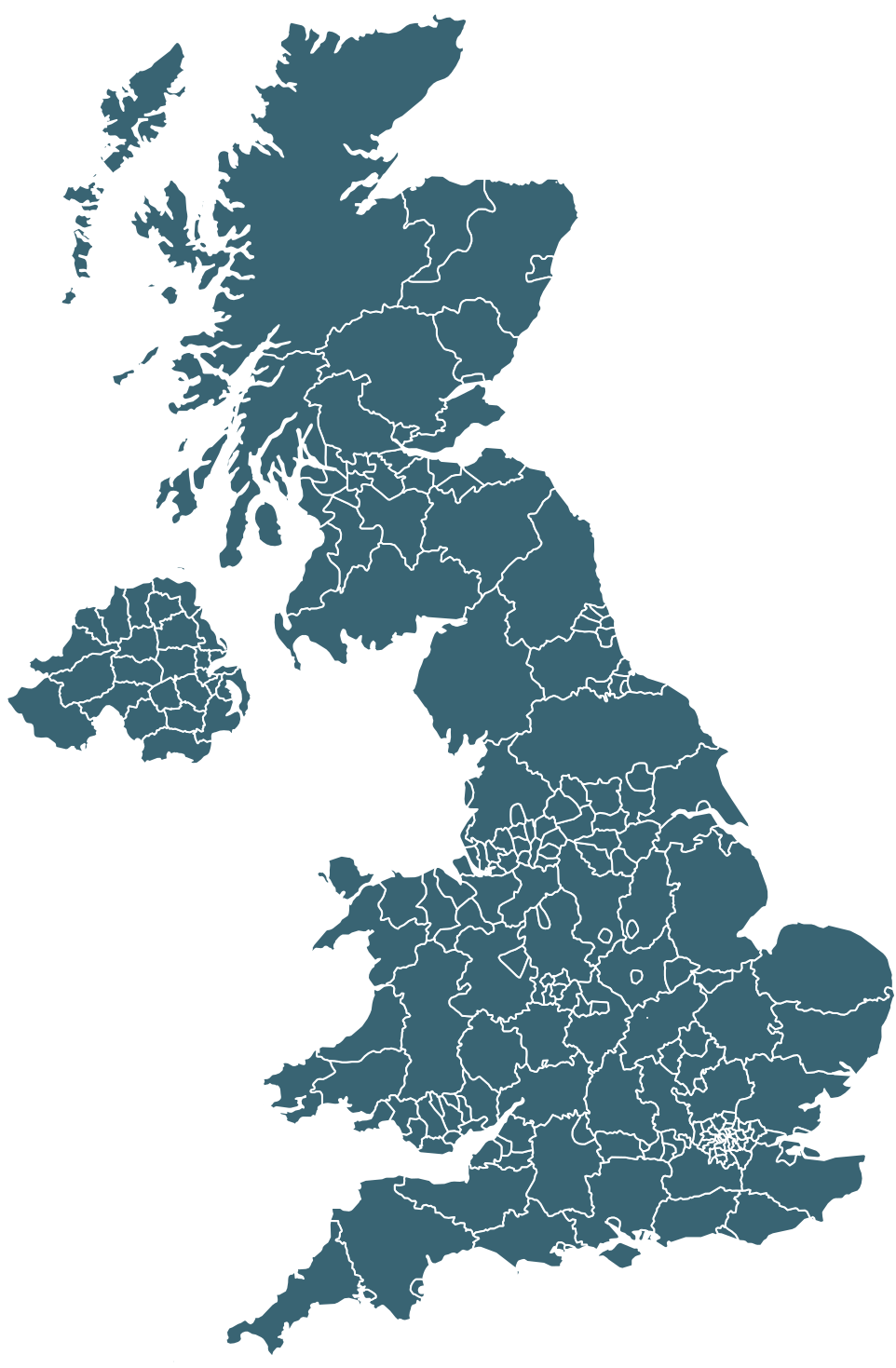
Helleborus Therapy at Home — Anywhere in the UK
Your therapy plan is still designed by Dr Saskia and overseen by our medical team.
For patients who are too unwell to travel, or who simply prefer home-based care, this means you can access the same specialist support wherever you are.
- Helleborus therapy delivered by our nurses at your home
- Nurses available across the UK
- Therapy plan designed by Dr Saskia, delivered locally
- Same protocol and medical oversight as our London clinic